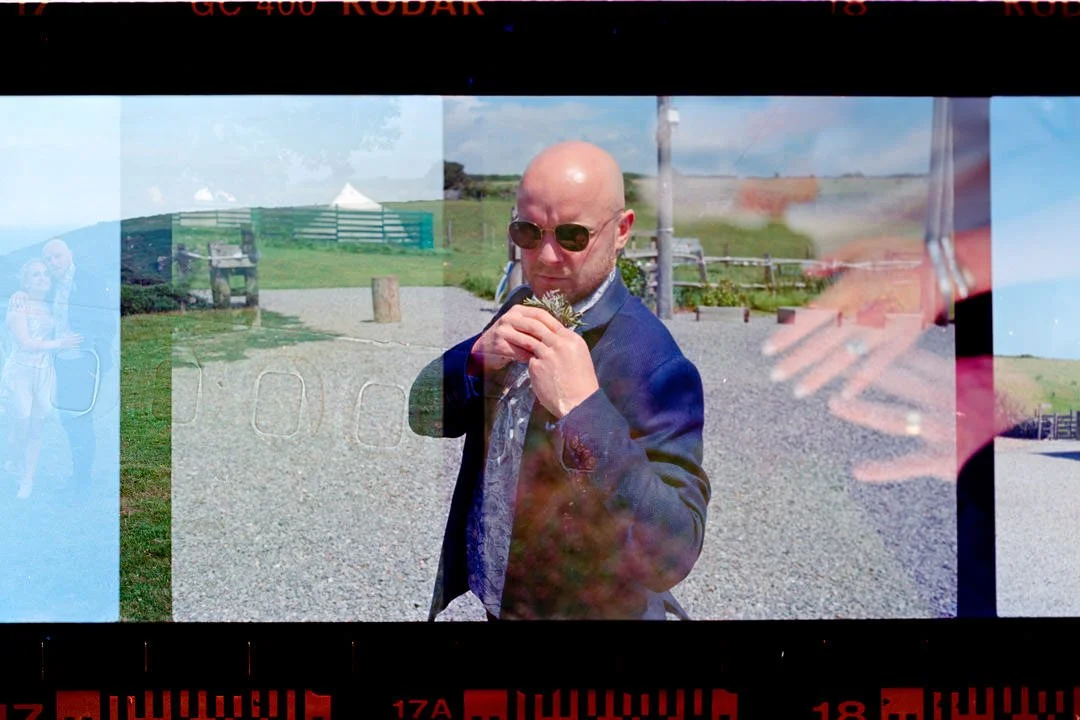
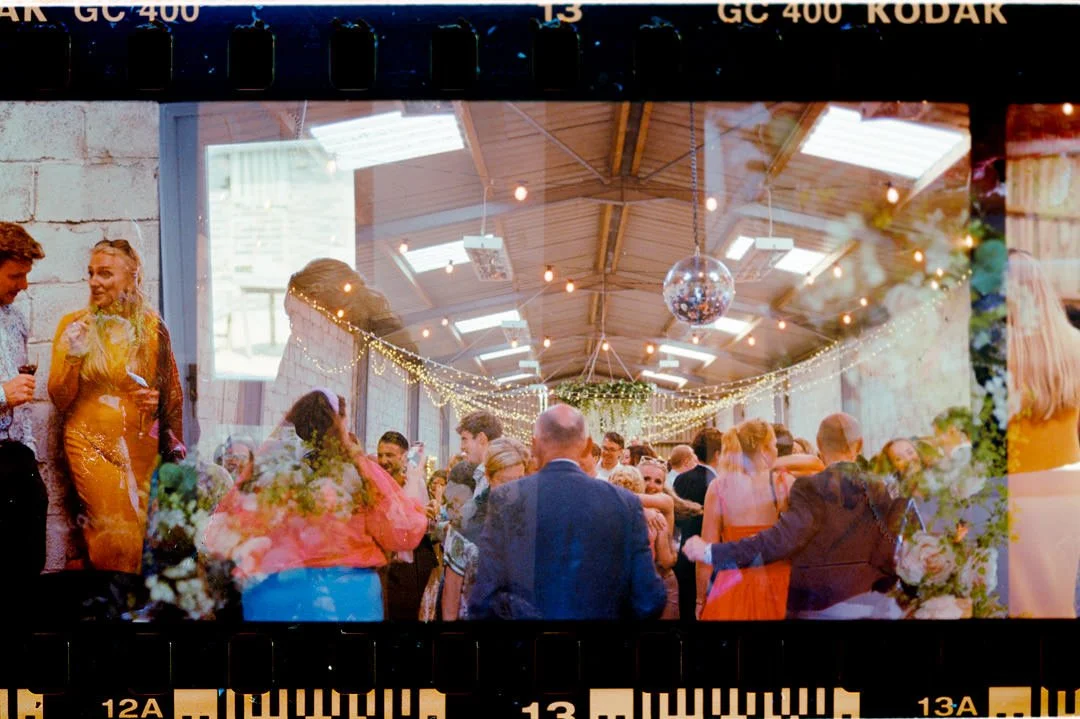
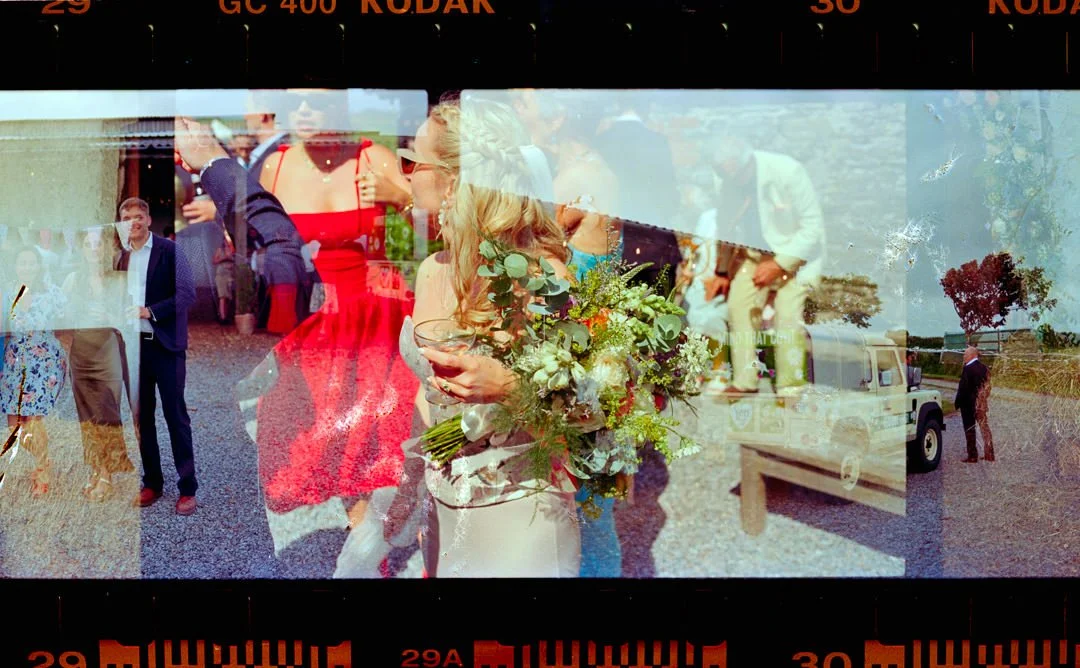
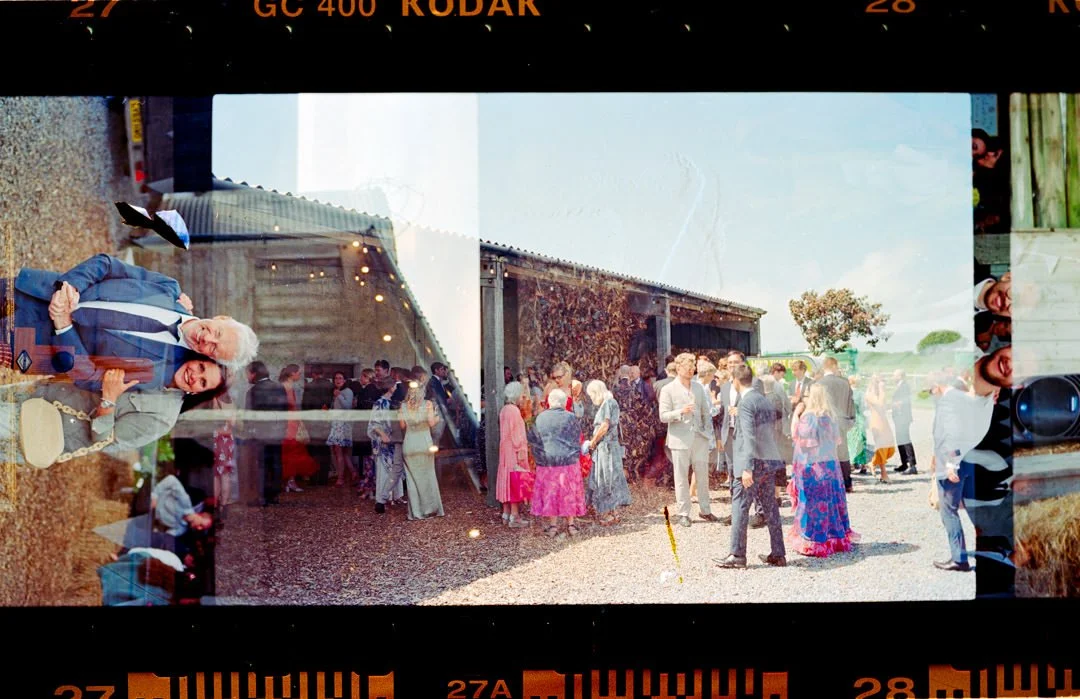
Double Exposure Wedding on Kodak ULTRAMAX.
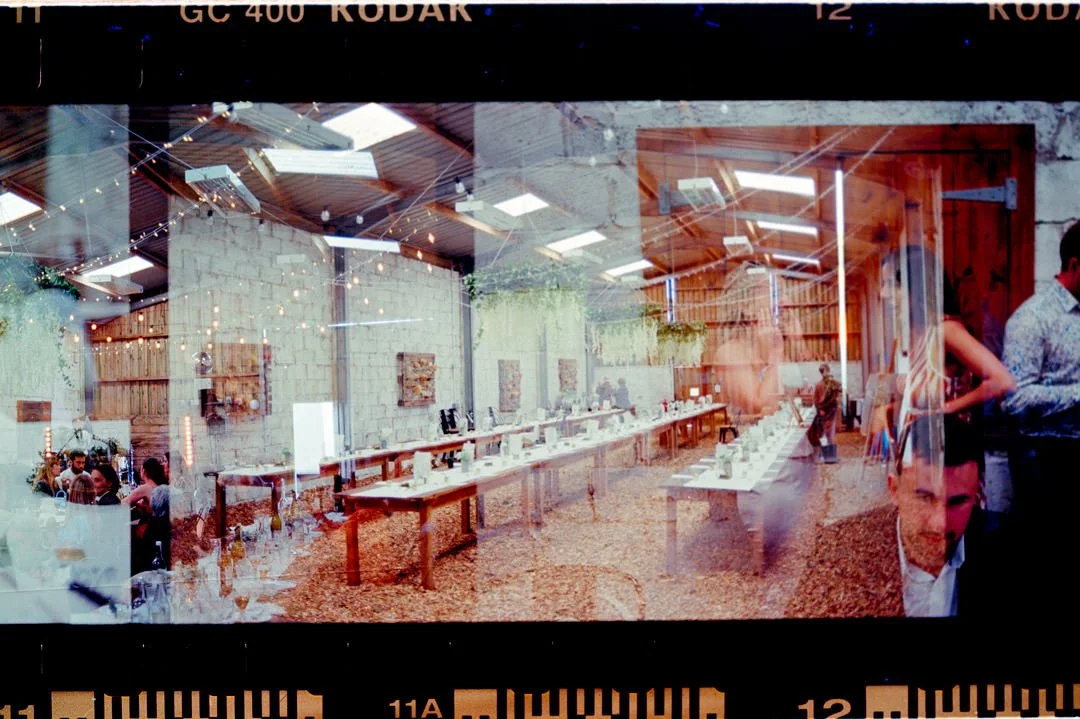
What is a double exposure?
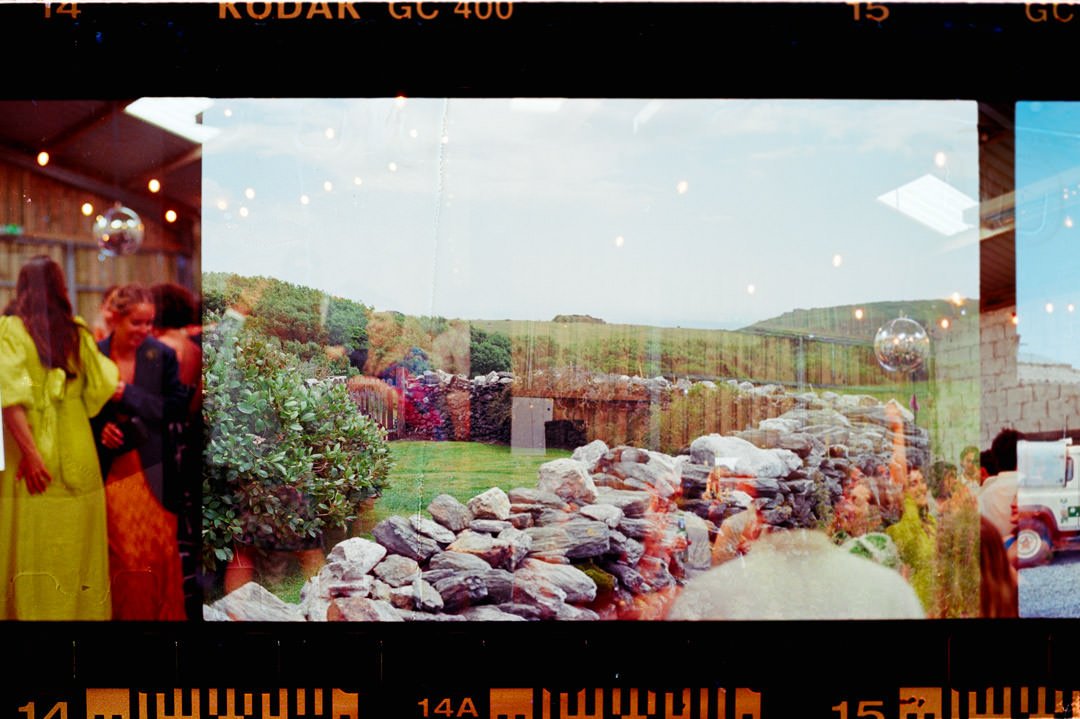
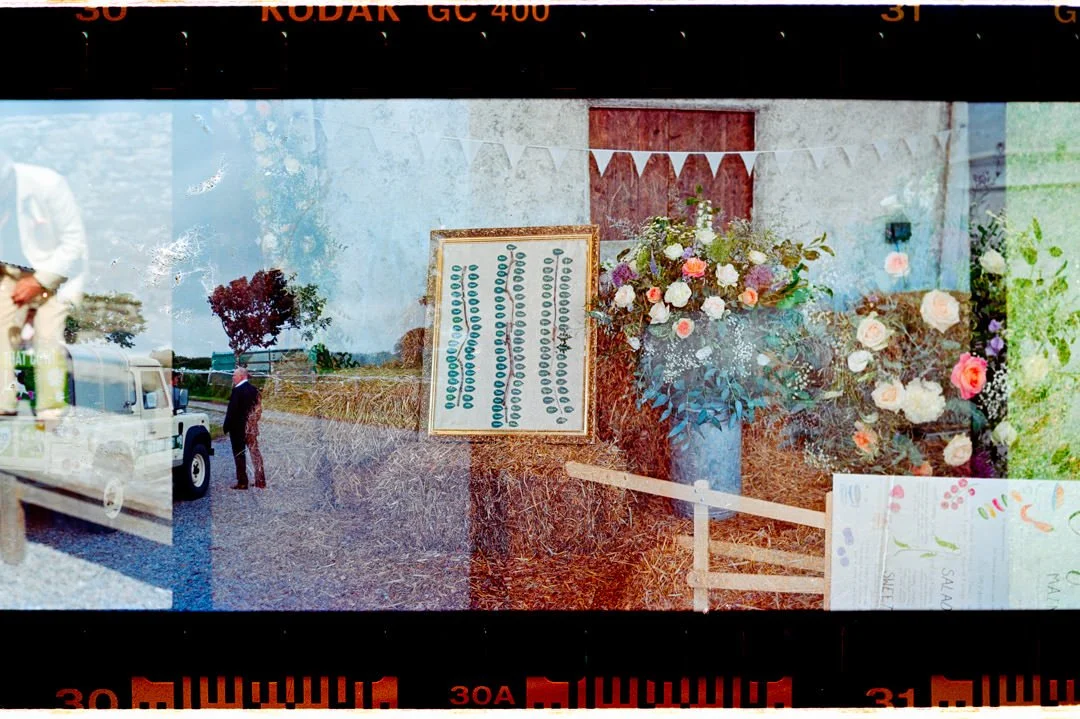
With digital and film photography there is a technique where the photographer can choose to shoot two photos, sometimes more, on top of each other. Exposing the same frame more than once with multiple compositions. With most cameras there is normally a setting in the menus, or a switch if you are shooting film. This will stop the film advancing and let the camera take another photo. The skill in composing double exposures can take time to learn, and it’s easier with a digital camera as you can use your live view screen to line the shots up, with film its all done by memory. In this set of photos i’m going to show you some double exposures from a wedding I photographed in East Sour, Devon. Except these double exposures were created in a different way.
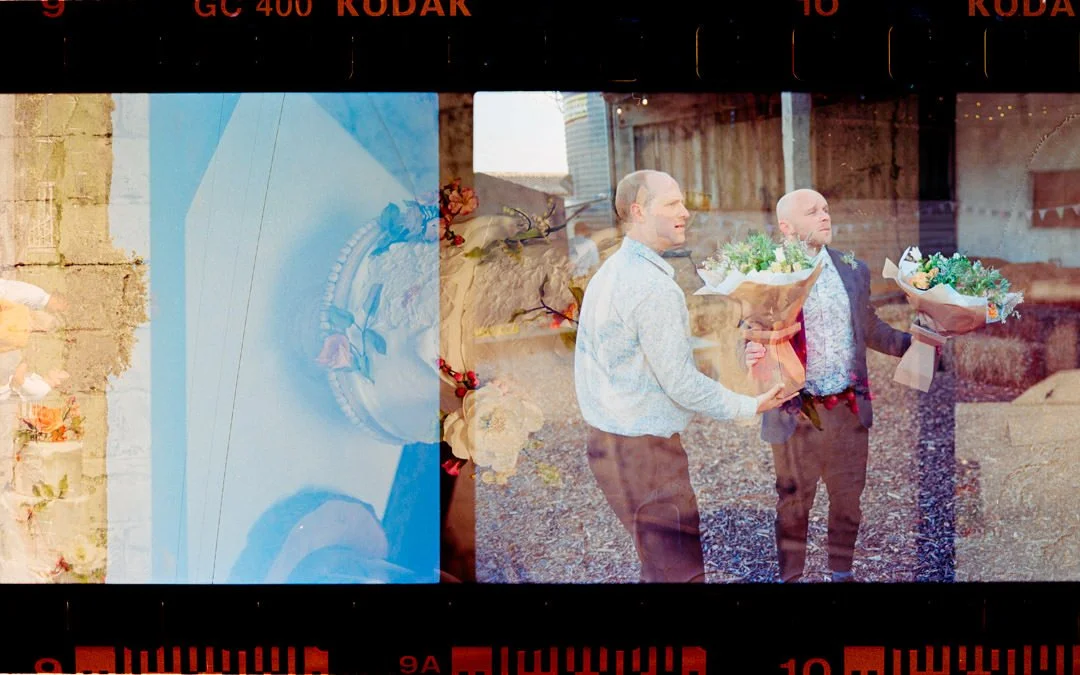
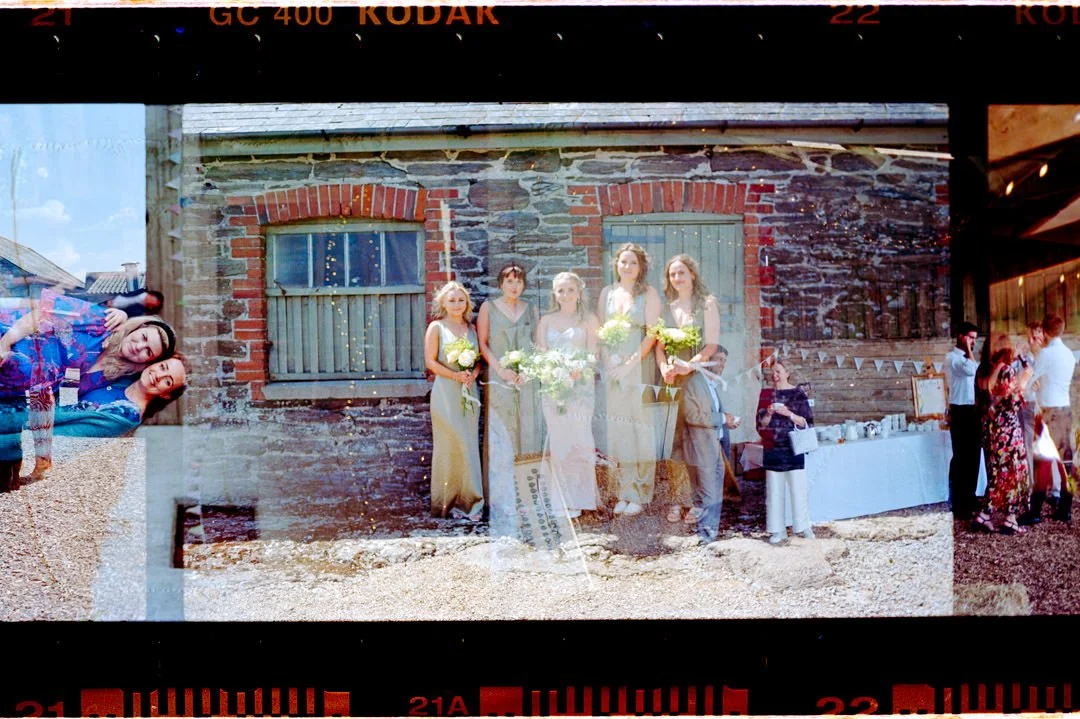
How this was set up to happen.
During the summer of 2024 I bought my first 35mm film camera, the Nikon F-501 and it cost me just £35. Alongside this I went all in and bought all the kit to be able to develop my own film at home. During this summer I had a wedding to photograph in East Sour, Devon. I chose to take my film camera with me and shoot some film just to get used to the process, and the bride and groom would get some film photos unexpected. This way there was no pressure, no expectations and I would have learnt how to manage and use a film camera at a wedding. I loaded the Nikon film SLR and 2 rolls of Kodak ULTRAMAX 400, that was expired by about 4 years.
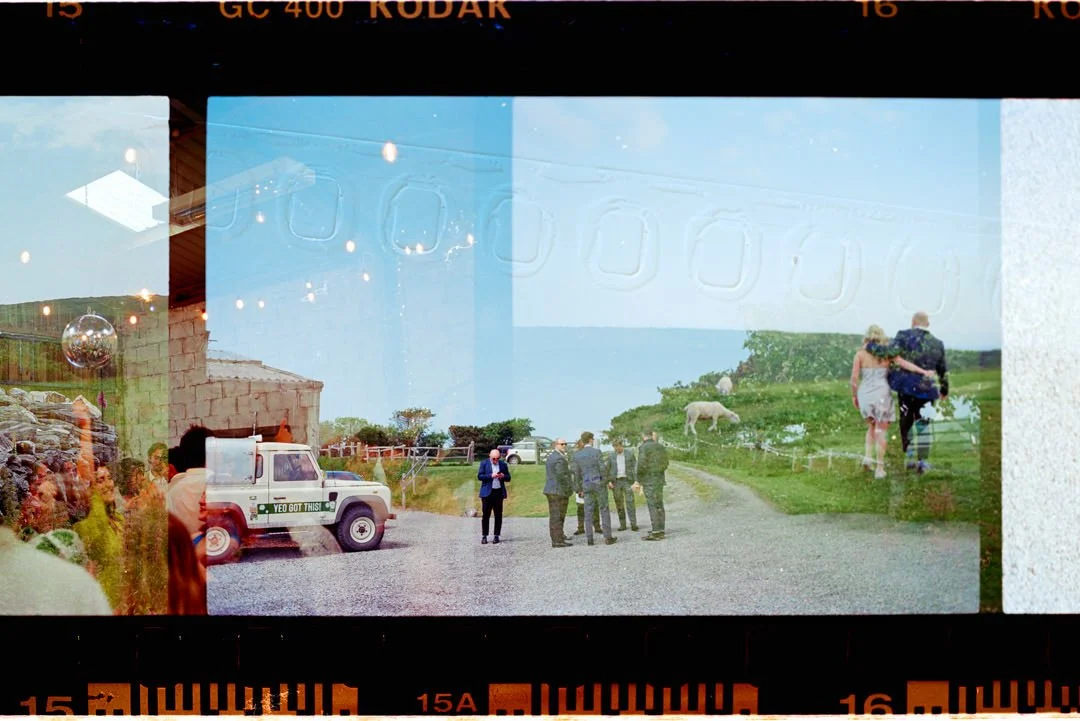
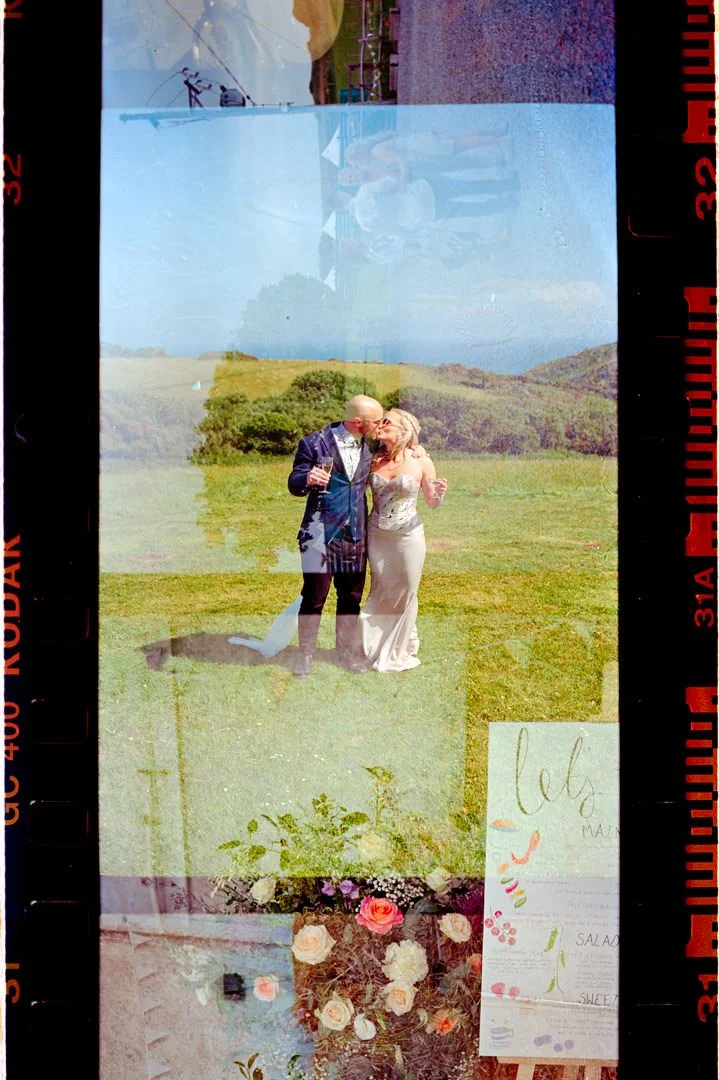
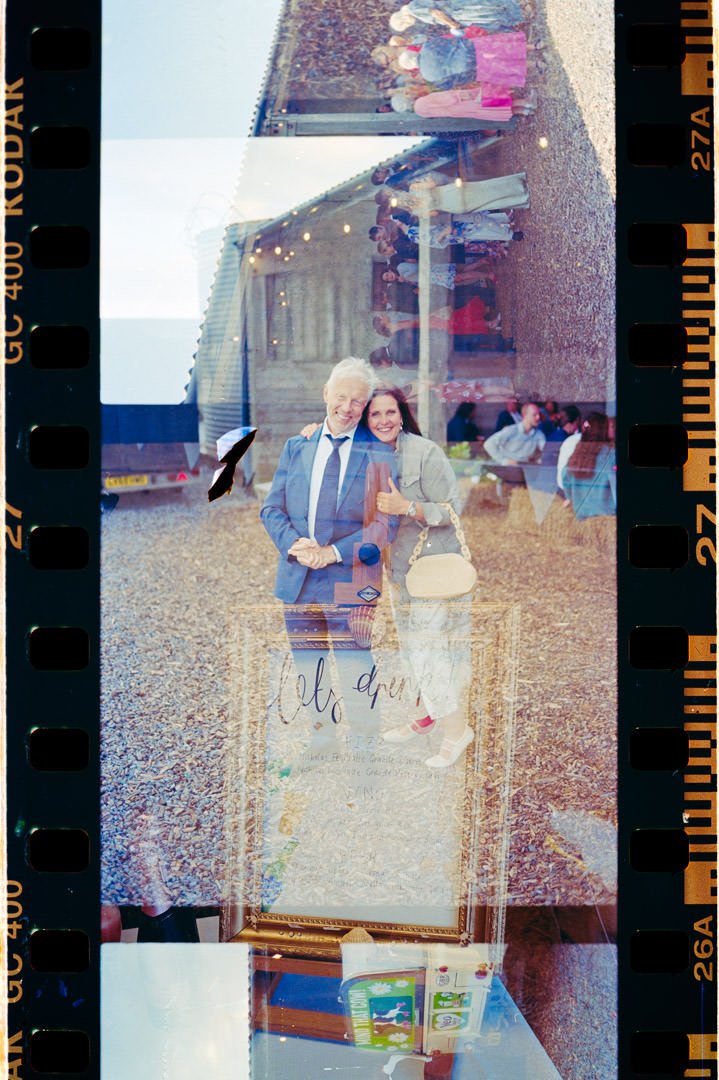
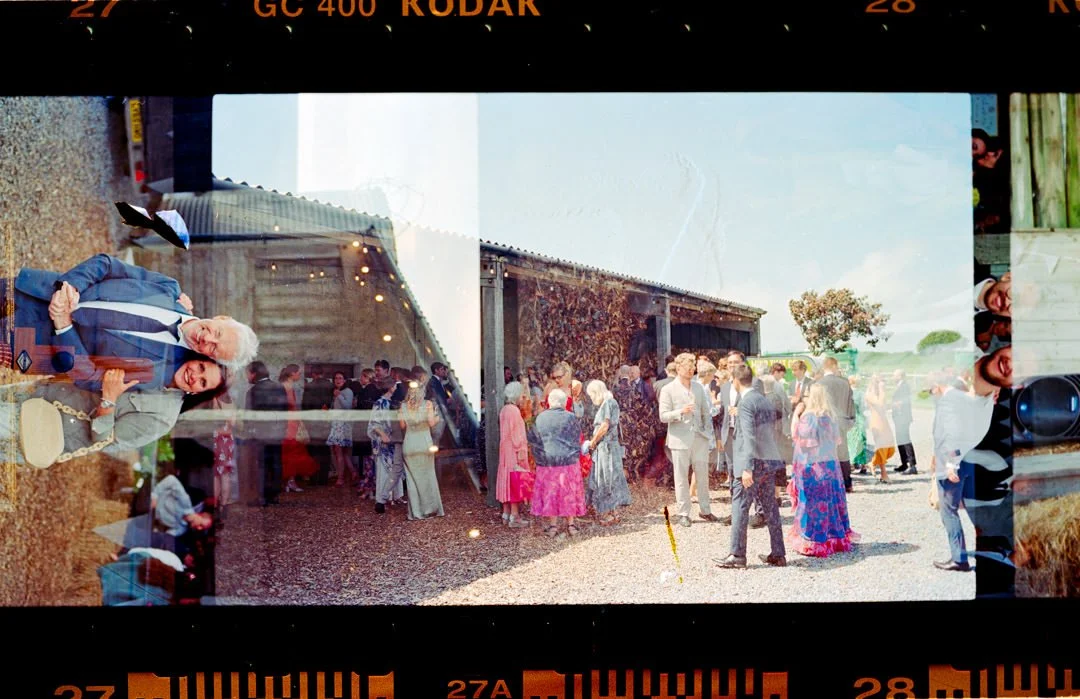
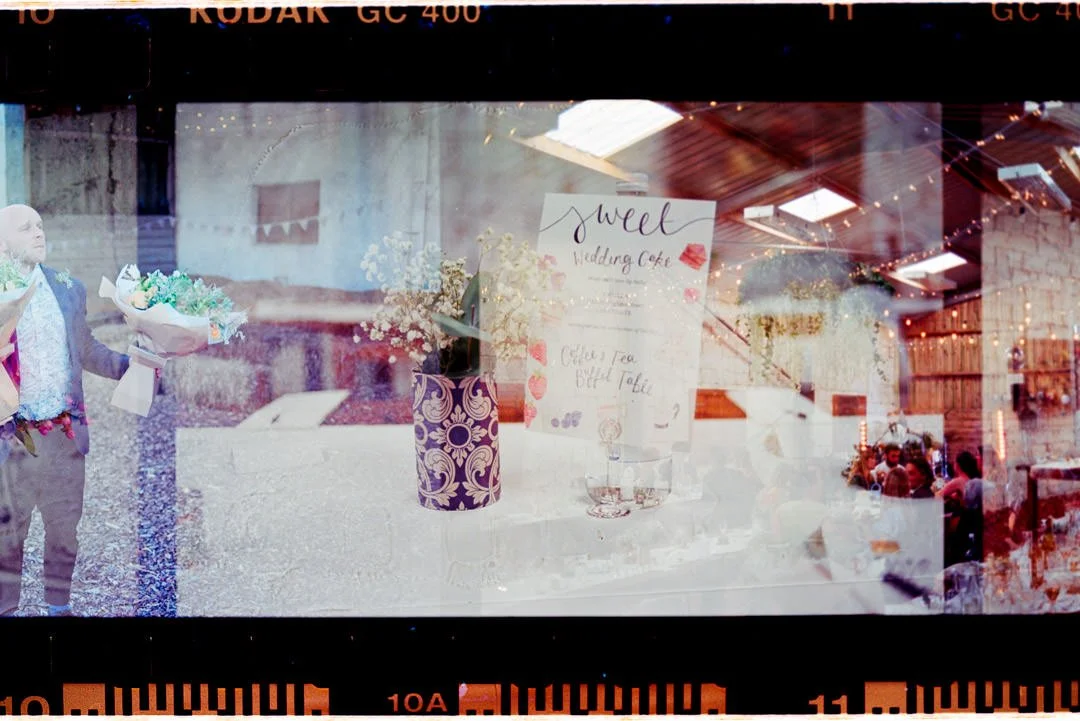
How these double exposures were created.
These double exposures where created out of frustration and thinking I had messed up the development process. The two rolls of Kodak ULTRAMAX where probably about the 8-9th rolls I had ever developed in my life, so it was very new and challenging. When pulling them out of the C-41 chemicals they didn’t look - the most dense, ie where they under developed, i’m not sure? Looking at the film borders with the film and frame info there is strong contrast that now tells me they developed fine.
Not giving them change to dry out properly I through them onto the kitchen work surface in a bundle, both rolls. Thinking aaaah, il try again at another wedding I was prepared to call these films a right off. Until, I decided about 30mins later to come back down stairs, hang them up and let them dry. I had calmed down and was willing to give it a chance, and I am so glad that I did.
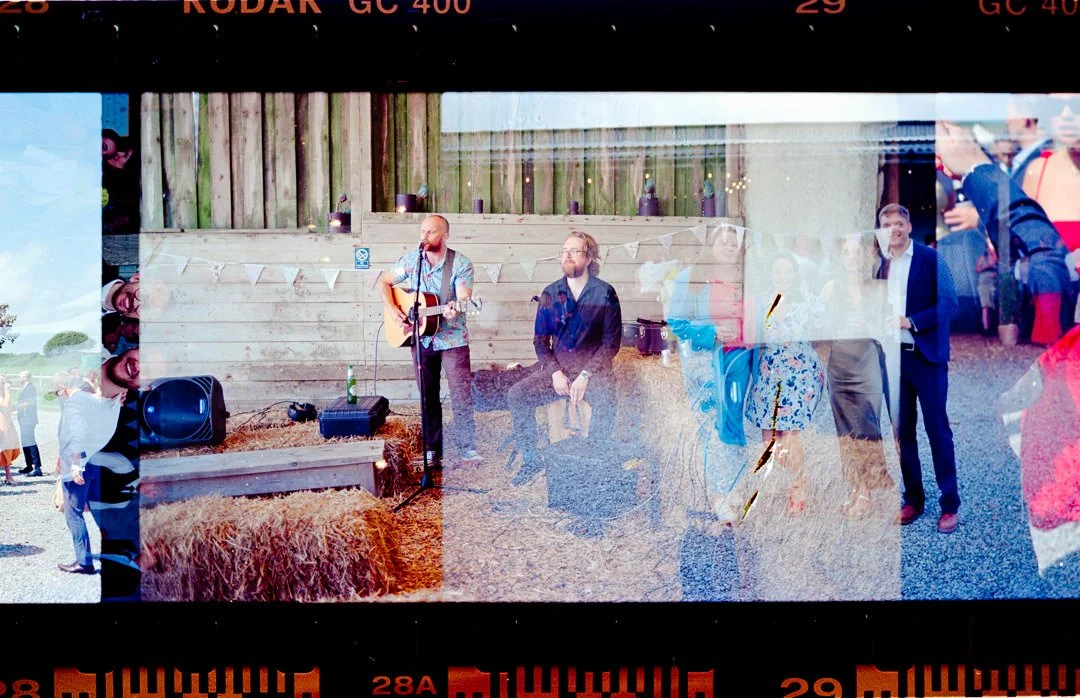
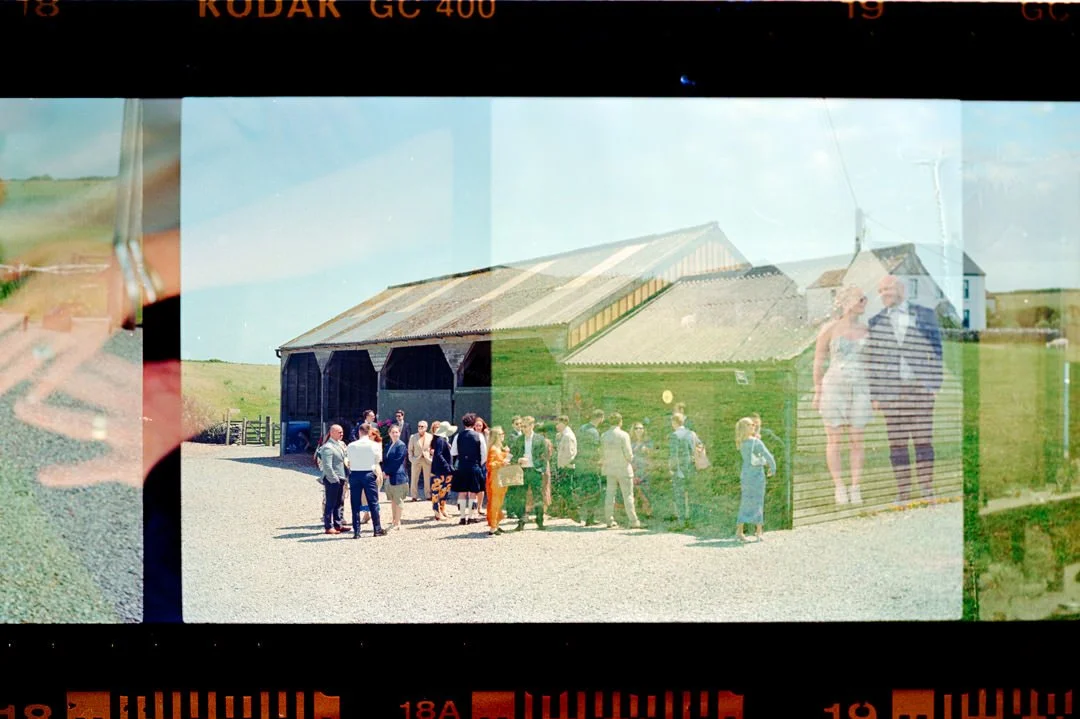
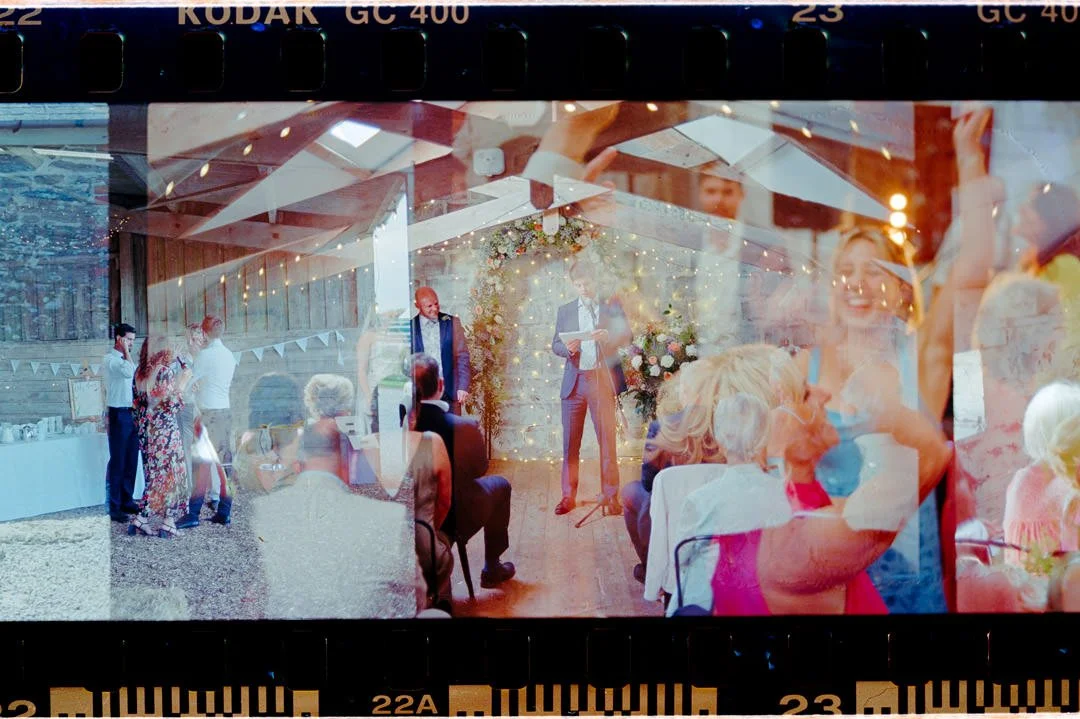
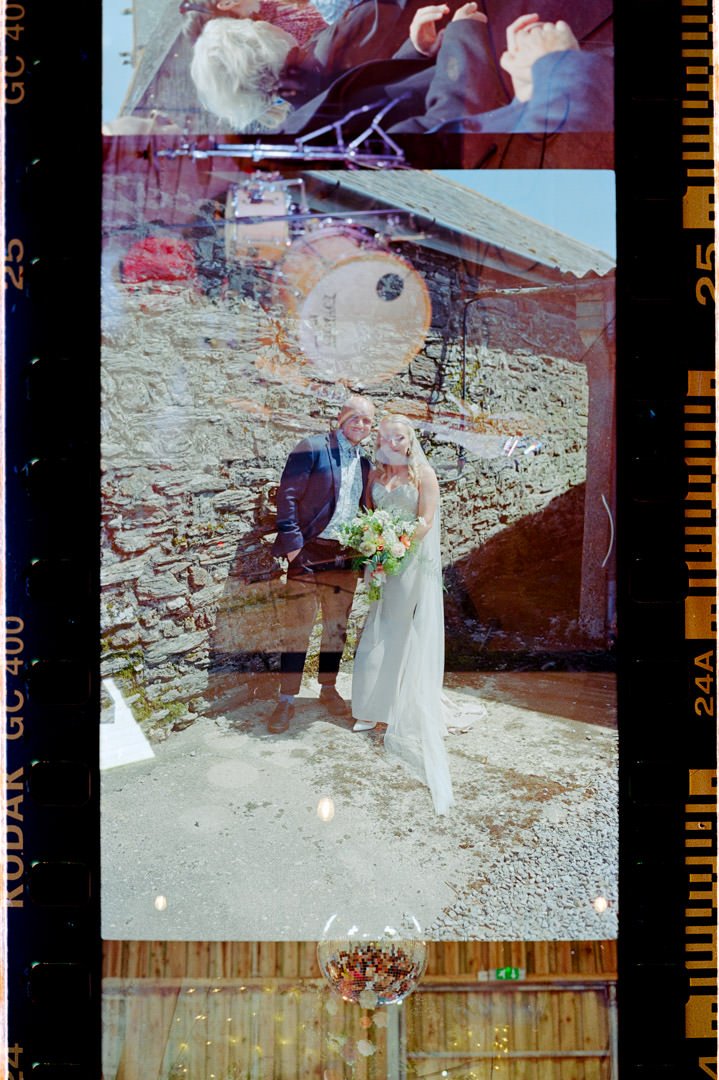
The reason these double exposures were a creative disaster.
From the anarchy of me thinking I had failed and throwing them down to tangle together, it caused the two wet rolls of film to stick together and merge. As they were still wet they cross loaded information from one another in most parts of the film, creating this double exposure effect. I had created double exposures without photoshop, no in camera settings and not actually double exposing, but just with and stress and thinking id wasted all that effort by ruining the development.
You want to know the best part about all of this, Lottie the bride absolutely loved them and I can see why. The complete unplanned result of these rolls of film, that I randomly thought I’d shoot on the day, that I let stick together when wet created a bonus set, of what looks like vintage distorted memories of the wedding. You can imagine that I learnt a valuable lesson on this day.
How would I attempt to do this again?
In order to do this again there is a couple of ways - and the first is how I produced these. Throw 2-3 wet films into a small box and shake them all together so they tangle and make contact. Before they are completely dry remove and hang to dry fully. This is a risky move as you wont know how well they would have crossed over onto each other until to scan them. It is defiantly doable again, but when you want something to happen it never quite happens the same as the unexpected.
The other way I would attempt a similar look would be shoot a roll of film, re-wind it, pull the film leader and re-load it back into the camera and shoot that roll again. This is then just shooting images over the top and bypassing the double exposure switch. Essentially there will no frames markers, just one roll of double exposures end to end all overlapping. From here you can crop out the sections you like the most. When double exposing a roll of film shoot it slightly under exposed or at least correctly.
I think one day I will try the second method, and possibly in a 4th camera such a point shoot like the Yaschica t3, keeping my Nikon F3 for the serious film photos along side my two digitals.
Conclusion.
Just stay calm. Ive been shooting film now and self developing for 2 years. Out of the 200+ rolls shot that I have self developed 95% have been fine. Errors where due to warming the C-41 up to much, or not agitating the Blix enough. Back when I made these images I was totally new to it and in deep learning territory. Shooting film can be stressful, but it can also be the most rewarding as you really feel like you have created an image. Learning to expose film properly is the most important part and also learning to trust the film and let it do its thing.
Secondly I learnt that maybe even if you try to follow all the rules as best as you can, with film you simply wont know what is going to happen. Sometimes you might be disappointed, and other times really pleased with random results.
